
Services · Video surveillance
Surveillance camera systems designed so you actually see what happens on your property.
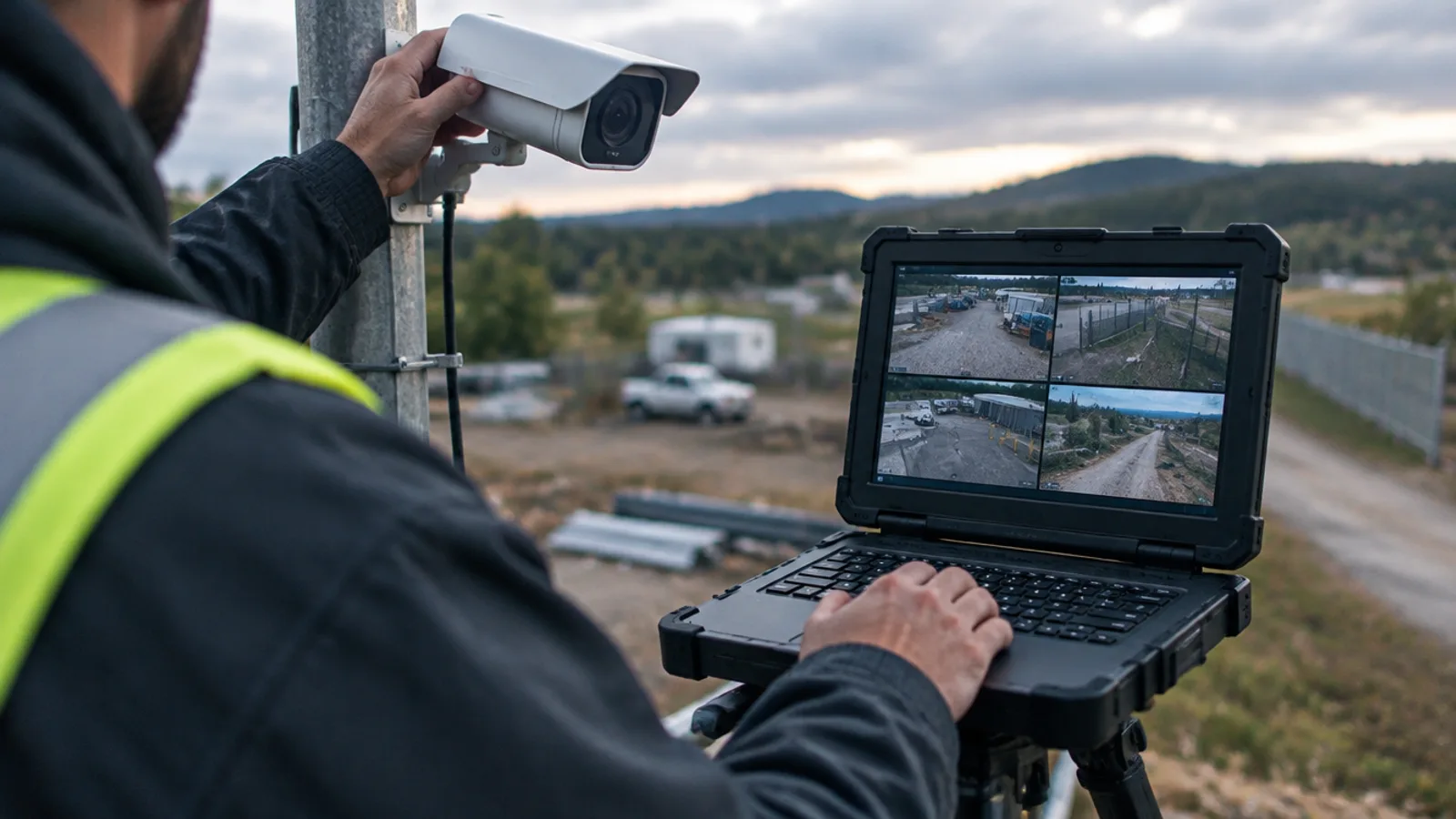
Cameras are what MasterVizion does first and best. A camera on every corner still misses the shot if the angles don't overlap — so we design surveillance systems where the fields of view line up, you get a license plate AND a face on the same event, and the footage is there weeks later when you go looking for it.
Scope of work
- Site walkthrough to map approaches, blind spots, and choke points
- Camera selection matched to each location — IP or analog HD, indoor or outdoor, not one model everywhere
- Overlapping fields of view so no single camera failure blinds a zone
- NVR or DVR recorder and storage sized to the retention you actually need
- Cabling run clean, terminated, tested, and labeled
- Remote viewing set up on your phone so you can check the live view and play back footage from anywhere
What a typical job looks like
A typical home job is four to eight cameras covering doors, driveway, and yard approaches, feeding an NVR with weeks of retention and a phone app. A small-business job adds entry/exit overlap and point-of-sale or dock coverage, sized to how the space is actually used. Every camera is aimed on site — a camera pointed at a roofline records a lot of roofline.
Coverage planning — where the cameras actually go
Good coverage isn't one camera per wall; it's the right cameras where the events happen. We walk the property and map the approaches — the gate, the driveway, the front door, the back slider, the register, the loading dock — then place cameras so their fields of view overlap at those choke points. Overlap is the whole idea: when two cameras see the same spot from different angles, one catches the plate while the other catches the face, and no single blind spot or knocked-loose camera leaves a gap. That planning is what separates a wall of cameras from a system that catches what matters.
Indoor vs outdoor cameras
Outdoor cameras are built for weather, temperature swings, and glare, with housings and IR rated to run through a Texas summer and a night with no moon. Indoor cameras can be smaller and more discreet because they don't fight the elements — the trade-off is placement, not toughness. We pick per location rather than buying one model for the whole job, so an eave camera watching the driveway and a dome over the register are each right for where they sit.
Recording and storage — what retention really means
Your cameras feed a recorder — an NVR for IP cameras, a DVR for analog HD — and the recorder writes to a drive built for continuous surveillance workloads. How far back you can look is a straight trade of camera count, resolution, and drive size: more cameras and higher resolution fill a drive faster, so weeks of retention on eight cameras needs more storage than the same weeks on four. We size the drive to the retention you actually want and set it up so the oldest footage rolls off automatically once it's full — no surprise gaps the week you needed the footage.
Remote viewing — your footage, on your phone
Every system we install is set up so you can open an app and see the live view or scroll back through recorded footage from anywhere — at work, on the road, wherever. "Monitoring" here means exactly that: you viewing your own cameras, on your own terms. We configure remote access carefully so the feed reaches your phone without leaving the recorder wide open to the internet — the part inexpensive kits most often get wrong.
What’s included
- Camera plan with overlapping coverage, matched indoor and outdoor
- Mounting, aiming, and weatherproofing
- NVR or DVR, storage, and network configuration
- Mobile app setup and a walkthrough of live view and playback
What it costs to start
Every camera job is priced against the property after the walkthrough — camera count, resolution, cable runs, and retention all drive the number, so we quote it once we've seen the space rather than guessing over the phone. Buying cameras on their own from the shop, without installation, is always an option too.
We don’t quote real numbers sight-unseen — book a walkthrough and you’ll get a price built to your property, not a guess.
Where we install
Across Dallas–Fort Worth and anywhere within 80 miles of its core cities, as standard. Installation more than 80 miles from Dallas–Fort Worth is available for jobs of 1,800 sq ft or more. Travel and accommodation are quoted per job.
What we'd pair with this
A working system is more than one category
These are the systems that most often complete the job — designed together so they actually work together.
- Networking & structured cablingThe wired backbone your cameras, TVs and Wi-Fi quietly depend on — pulled clean, labeled, tested, and finished with the plates that make it look done.Explore the work →
- Video, TV & antennasClean displays and free local channels — screens hung square with the cable hidden, and over-the-air antennas aimed for your address.Explore the work →
Common questions
Video surveillance — questions people ask
How many cameras do I need?
It depends on the property and what you want to see, not a rule of thumb. Most homes land around four to eight to cover doors, driveway, and yard approaches with the overlap that actually catches an event. We map it at the walkthrough and tell you honestly where another camera earns its place and where it's just another feed to scroll past.
Indoor or outdoor cameras — what's the difference?
Outdoor cameras are weather- and glare-rated to run through heat, rain, and a dark night; indoor cameras can be smaller and more discreet because they aren't fighting the elements. We choose per location rather than one model everywhere, so each camera is right for where it sits.
How long is footage kept?
As long as the storage you choose allows. Retention is a trade of camera count, resolution, and drive size — we size the drive to the number of days you want to be able to look back, and the oldest footage rolls off automatically once it's full.
Can I view the cameras on my phone?
Yes. Every system is set up with a mobile app so you can watch the live view and play back recorded footage from anywhere. We configure the remote access securely so your feed reaches you without leaving the recorder exposed.
Do the cameras record audio?
Some cameras can, and whether that's appropriate depends on where they are and Texas law on recording conversations. We set audio to match what's sensible and legal for each location, and we'll talk it through at the walkthrough rather than leaving it on by default.
What internet do the cameras need?
Recording itself happens locally on the NVR or DVR and keeps working even if your internet drops. Internet is only needed for remote viewing on your phone — a normal home connection is plenty, since the app streams on demand rather than uploading everything.
Do you sell cameras without installation?
Yes. Everything in the surveillance shop is real hardware you can buy and take delivery of on its own — a single camera, a recorder, a drive, or a full camera-and-recorder kit. Professional installation is an option you add if you want it, never forced.
Can you work with cameras I already own?
Often yes. If your existing cameras are standards-compatible and in good shape, we can fold them into a new recorder and design around them rather than making you rip and replace. We'll tell you honestly at the walkthrough if a camera is holding the system back.
Why is your camera more expensive than a similar-looking one online?
The box may look identical; the sensor, lens, low-light performance, and firmware support usually aren't. We choose gear we can stand behind for years and service locally — and we tell you what you'd give up with the cheaper look-alike.
See it planned for your property
The walkthrough is free, with no obligation — a written scope and a fixed quote before you decide anything.